In this guide:
- Why ready-to-drink botanical sodas work better than DIY mocktails for dinner parties
- The 4 professional approaches restaurants use (and why they work for home entertaining)
- What bartenders can't replicate: separate extraction, sourcing, and precision blending
- Complete setup guide: glassware, quantities, and serving like a restaurant
Jump to:
- The Dinner Party Problem
- What Restaurants Do
- Why Aperitivo Culture Matters
- The 4 Professional Approaches
- How to Serve
- Shopping & Setup
- FAQ
Casamara Club ships nationwide at casamaraclub.com
Walk into any serious cocktail bar and you'll find talented bartenders making excellent mocktails - muddling herbs, balancing acids, building flavor the same way they would for a craft cocktail. It's skilled work, and the results can be excellent.
But when those same bartenders are hosting dinner at home, or when they want something to drink throughout a meal, they reach for something different. Not because mocktails are bad, but because making cocktails - with or without alcohol - is a fundamentally different project than serving drinks throughout a dinner party.
This guide explains what professional bartenders and beverage directors use instead, why it works better for dinner parties, and how to serve it. Based on conversations with beverage directors at Elske, Canlis, Oriole, Staplehouse, and 850+ restaurants serving Casamara Club nationwide.
The Dinner Party Problem
Making cocktails - with or without alcohol - works beautifully when you're making one drink. The challenge comes when you need to serve 8-10 people for three hours.
When You're Making One Drink
A bartender making a single mocktail has time to:
- Muddle fresh herbs to release aromatics
- Juice citrus and adjust acidity
- Build layers of flavor with multiple syrups
- Garnish thoughtfully
- Serve it at the perfect moment
This is craft. This is what good bartenders do. And the results justify the effort.
When You're Serving 8-10 People for Three Hours
Now you need 32-40 drinks. The math changes. Each mocktail taking 3-5 minutes means you're spending 90-150 minutes of your party making drinks. Your guests are waiting. Food is getting cold. You're not at your own dinner.
And even if you had the time: mocktails optimized for cocktail hour don't necessarily work at the dinner table. Most are built around fruit juices and syrups, delivering 20-40g of sugar per serving. That's fine for a pre-dinner aperitivo with salty snacks. It competes with food during the meal.
This is why restaurants serving multi-course dinners have a separate category of drinks alongside their craft cocktail programs. Not because cocktails are bad, but because the demands are different.
What Restaurants Do
Restaurants with serious beverage programs do two things at once:
1. They make excellent craft mocktails - labor-intensive, customized, built to order. Fresh juices, house-made syrups, seasonal ingredients. These belong on the menu next to craft cocktails.
2. They serve ready-to-drink botanical sodas and aperitivos - low sugar, food-pairing focused, consistent, designed to be drunk throughout a meal rather than sipped once.
These aren't in competition. They serve different purposes.
What Bartenders Can Make vs What They Can't
Bartenders excel at fresh, made-to-order drinks. Their toolkit:
- Fresh herbs and produce
- House-made syrups and tinctures
- Citrus juicing and acid-adjusting
- Layering and technique
This creates drinks with brightness, immediacy, seasonal expression.
What bartenders can't do in-house:
- Source Calabrian chinotto (specific bitter orange variety unavailable fresh in the US)
- Age orris root for three years before extraction
- Extract individual botanicals separately using commercial equipment
- Precision-blend at scale across thousands of bottles
- Achieve 4-5g sugar while maintaining complexity
This is industrial food production - the same reason restaurants serve imported Italian pasta alongside house-made pasta. Different tools, different results, both belong.
Why Restaurants Serve Both
Monica Casillas-Rios won the 2023 Michelin Guide Chicago Exceptional Cocktails Award for Elske. She makes outstanding cocktails. She also prioritizes non-alcoholic beverages: "I try to drink non-alcoholic beverages whenever possible... I think the cocktail community has done a fantastic job of giving people the option of non-alcoholic products that aren't the typical sodas/juices."
Professional bartenders make craft mocktails. They also serve professional-grade botanical sodas that offer complexity bartenders can't create themselves - separate botanical extraction, specialized ingredient sourcing, precision sugar control.
This is why 850+ restaurants - including Elske, Oriole (Two Michelin Stars), Canlis, Staplehouse, Canon Whiskey & Bitters, Patterson House, and Ladder 4 - serve Casamara Club.

Why Aperitivo Culture Matters
Italian aperitivo culture offers a useful framework for thinking about drinks and food together.
What Aperitivo Actually Means
Aperitivo is a time of day (roughly 5-7pm) and a cultural practice (pre-dinner drinks and snacks). The drinks served during aperitivo hour - Campari, Aperol, vermouth, amaro - share certain characteristics:
- Lower sugar than cocktails (8-15g per serving vs 20-40g)
- Bitter-sweet balance rather than fruit-forward sweetness
- Botanical complexity (gentian, chinotto, wormwood, herbs)
- Designed to stimulate appetite and pair with salty snacks
The goal isn't intoxication. It's transition - from work to leisure, from hunger to anticipation, from standing to sitting down to dinner.
What This Means for Non-Alcoholic Drinks
Aperitivo culture teaches us that drinks meant to accompany food need:
- Lower sugar so they don't compete with the meal
- Bitterness and acidity to cleanse the palate
- Enough complexity to stay interesting across multiple glasses
- Restraint - the drink shouldn't be the loudest thing on the table
This is why fruit juice and simple syrup - the backbone of most mocktails - work less well during dinner. They're optimized for different goals.
The Comparison That Actually Matters
| Aspect | House Mocktails | Botanical Sodas |
|---|---|---|
| Sugar | 20-40g per serving | 4-5g per serving |
| Base | Fruit juice, syrups | Botanical extracts |
| Preparation | Made to order, 3-5 min | Pour and serve, 30 sec |
| Consistency | Varies by preparation | Professional-grade |
| Best for | Individual cocktail moment | Throughout the meal |
| Scaling | Difficult for large parties | Effortless |
Neither is "better." They're built for different purposes.
The 4 Professional Approaches
Here are the four approaches restaurants use for non-alcoholic drinks during dinner service - and how they translate to home entertaining.
Approach 1: Extra-Dry Botanical Sodas
What they are: Sodas built around separate botanical extraction - each ingredient extracted individually, then precision-blended at 4-5g sugar per 12oz serving.
Why restaurants use them: They function like wine or beer during a meal. Enough complexity to stay interesting, low enough sugar to pair with food, consistent quality drink after drink.
What makes them different:
Most commercial sodas use single-extraction natural flavors: all ingredients extracted together in one process. The result is one-dimensional.
Separate extraction means each botanical maintains distinct character. Chinotto extracted alone. Juniper extracted alone. Gentian extracted alone. Then blended with precision.
This is why the first sip might taste citrus-forward, the second reveals herbal notes, the third brings out mineral finish. The complexity evolves.
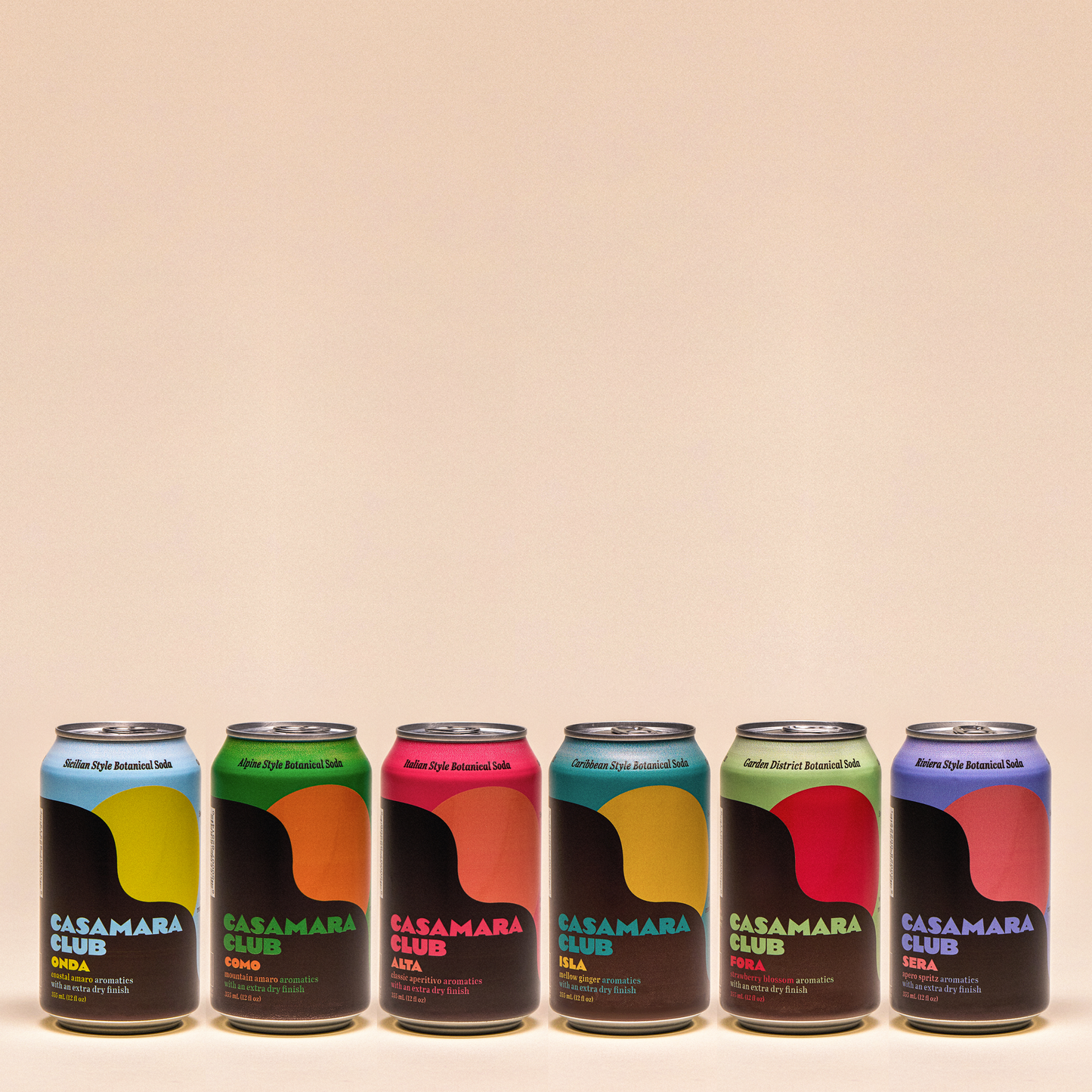
The Casamara Club range:
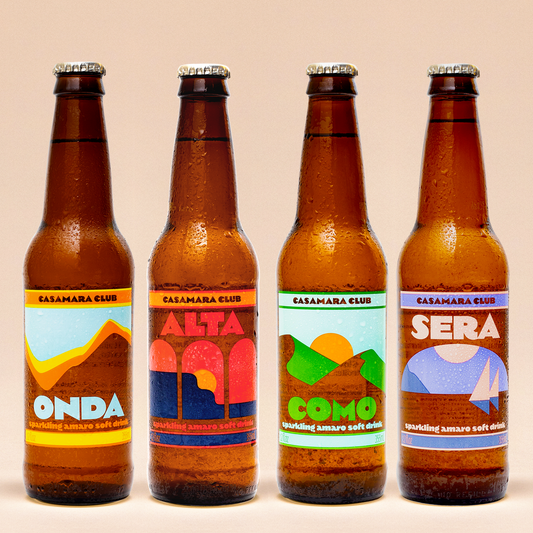
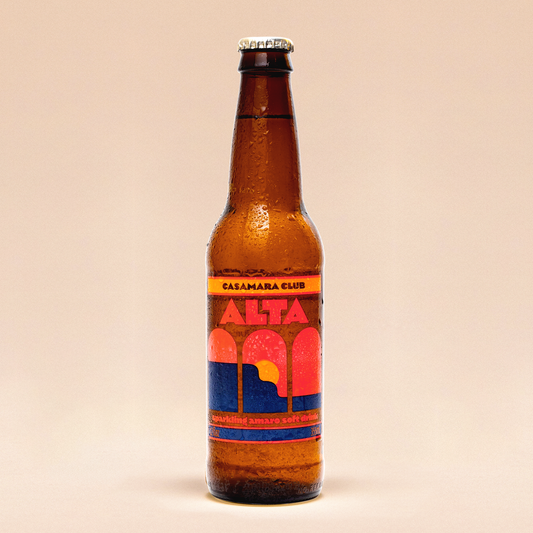
- Alta: Chinotto from Calabrian coast, juniper, orris root, mandarin - reminiscent of Negroni flavors
- Onda: Sage, lemon, rhubarb - almost savory, pairs with seafood
- Como: Mandarin, mint, wildflower - approachable, versatile
- Sera: Ruby grapefruit, cinnamon, rhubarb - tart, refreshing
- Isla: Ginger, lime, allspice - gentle warmth
- Fora: Strawberry, rose, hibiscus - delicate, floral
Each uses Mediterranean sea salt for mineral finish - not enough to taste salty, but enough to enhance citrus and provide clean finish.
Food pairing:
- Rich, fatty dishes (pizza, charcuterie): Citrus-forward sodas cut through fat
- Seafood, vegetables: Herbal, saline sodas enhance without overwhelming
- Spicy food: Bitter-sweet complexity balances heat without adding sugar
How to serve: Cold from the refrigerator (38-42°F), ice optional, garnish optional. Serve bottle alongside glass so guests can top up themselves - same as wine or beer service.
Where restaurants serve them: Elske (One Michelin Star), Oriole (Two Michelin Stars), Canlis, Staplehouse, Canon Whiskey & Bitters, 850+ accounts nationwide.
Approach 2: Build-Your-Own Stations
What they are: Premium bases - drinking vinegars, cocktail syrups, tonic concentrates - mixed with sparkling water. Guests control strength and sweetness.
Why restaurants use them: Interactive element for guests, lower cost per drink than fully prepared options, allows customization.
Components:
Drinking vinegars (Tart Vinegar, Pok Pok Som): 1 oz vinegar + 4-5 oz sparkling water. Provides acidity and complexity without relying on sugar. The tartness stimulates appetite the same way traditional aperitivos do.
Premium syrups (Small Hand Foods, Liber & Co): 3/4 oz syrup + 5 oz sparkling water + fresh citrus. Professional-grade ingredients bring real fruit and botanical character.
Tonic concentrates (Jack Rudy, Top Note): Mixed per bottle instructions. Guests make custom-strength G&T-style drinks.
How to serve: Set up simple station with base ingredients, sparkling water, citrus, herbs, ice, and ratio cards. Keep it to 2-3 base options maximum - more creates decision fatigue.
Best for: Pre-dinner when guests are arriving. The DIY element gives early arrivals something to do while you finish cooking.
Approach 3: Ready-to-Drink Non-Alcoholic Cocktails
What they are: Full-flavored aperitivos with cocktail strength (8-12g sugar per 8oz). Designed to replace Negronis and Aperol Spritzes during aperitivo hour - sippable, complex, meant to be savored.
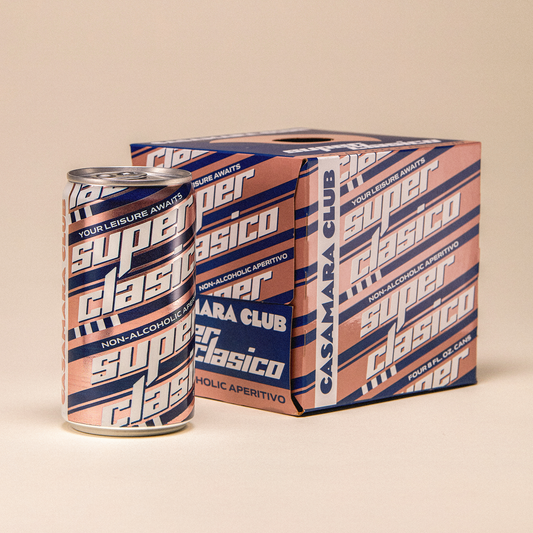
The Superclasico example:
Casamara Club's Superclasico was called a "rare unanimous favorite" by NYT Wirecutter in their 2025 Best Nonalcoholic Drinks guide. Their full review: "Superclasico wows with delicate balance—sweet but not cloying, bitter but not halting, nicely tannic, and endlessly sippable."
Inspired by Italian chinotto aperitifs and Negronis, it delivers craft cocktail complexity in an 8oz can. Chinotto and juniper brightness upfront, tannins from red currants and kola nut in the middle, lingering bitterness softened by Madagascar vanilla.
How to serve: Over ice in rocks glass with orange wheel. Or lengthen with soda water for spritz-style serve. Some guests want full-strength aperitivo flavor, others prefer it lighter - same can works for both.
Best for: Aperitivo hour with classic snacks (olives, almonds, charcuterie, aged cheese).
Approach 4: Non-Alcoholic Gin & Tonic
What they are: Premium non-alcoholic gin (Seedlip, Ritual, Monday) + tonic or botanical soda.
Why this works: Most accessible format for guests unfamiliar with aperitivo culture. Everyone recognizes a G&T.
The ratio: 2 oz NA gin + 4-5 oz tonic (or botanical soda for lower sugar alternative).
Why botanical sodas work as tonic: Traditional tonic provides bitterness (quinine), botanical complexity, and carbonation. Botanical sodas like Casamara Club Onda or Como provide bitterness (gentian, chinotto), even more botanical complexity (separate extraction of 6-8 botanicals), and carbonation - all at 4-5g sugar instead of 20-25g.
How to serve: Build over ice in highball glass. Cucumber ribbon or lemon twist for garnish.
Best for: Guests who want "something familiar" or aren't adventurous drinkers.

How to Serve Like a Restaurant
Glassware
Duralex Picardie glasses work for everything. These French café glasses are used in restaurants from casual bistros to Michelin-starred establishments.
Why bartenders choose them: "They look nice, but they're also made from a fairly durable tempered glass, so you don't have to worry about them breaking." (Jason LaValla, quoted in Consumer Reports)
They're dishwasher-safe, stackable, tempered glass, inexpensive (~$18-25 for six), and work for water, wine, beer, cocktails, everything.
Interior designer Melanie Zaelich's tip (Consumer Reports): "Check the bottom of the glass. Does it have a dimple or an inset? If so, water will collect there in the dishwasher." Picardie glasses have flat bottoms - no dimple, no water collection.
Temperature
Serve everything cold. That's the rule. Everything else is optional.
Refrigerate bottles for at least 2 hours before service. Ideal temperature: 38-42°F, same as white wine.
Ice
Optional for botanical sodas - they taste excellent cold without dilution. Use large ice cubes when you do use ice - they melt slower.
Garnish
Only garnish if it genuinely enhances the drink.
Citrus twists: Express oils over drink (squeeze peel skin-side down), rim the glass, drop in. Releases aromatic oils that enhance first sip.
Herbs: Slap herb sprig between palms to release aromatics before adding to drink.
The Professional Serving Trick
Serve the bottle alongside the glass. This lets guests top up themselves (less work for you), shows the quality of what they're drinking, and signals this is a premium beverage.
Restaurants do this constantly with wine and beer. Same principle applies.
Shopping & Setup Guide
Quantities for 8-10 Guests (3-Hour Party)
The formula:
- First hour: 2 drinks per person (16-20 drinks)
- Each subsequent hour: 1 drink per person (8-10 drinks/hour)
- Total for 3 hours: 32-40 drinks
Shopping Options
Option A: Botanical Sodas Only (~$120-150)
- 3-4 cases (36-48 bottles) in 2-3 flavors
- Citrus for garnish: 2 lemons, 2 oranges
- Optional: Fresh herbs
- Ice if serving over ice
- Glassware: 10-12 glasses
Option B: Mixed Styles (~$130-170)
- 2 cases botanical sodas (24 bottles)
- 1 bottle drinking vinegar OR 2 bottles cocktail syrup
- 2 cases sparkling water
- Optional: 1-2 bottles NA gin + tonic
- Same garnish and glassware
Option C: Budget-Conscious (~$80-100)
- 1 case botanical sodas (for aperitivo hour)
- Build-your-own components for main party
The 30-Minute Setup
2+ hours before: Chill all bottles
20 minutes before:
- Set out glassware
- Fill ice bucket with fresh ice
- Prep garnishes: citrus wedges/wheels, washed herbs
- Set garnishes in small bowls
10 minutes before:
- Arrange bottles (group by style if serving multiple)
- Add simple label cards if serving 4+ options
- Keep extras chilled for restocking
As guests arrive: Pour drinks or direct guests to self-serve station
Setup Styles
Bottle Service (casual): Pre-chill bottles, set out with glassware and garnishes. Let guests pour themselves.
Pre-Poured (formal): Pour drinks 5-10 minutes before guests arrive, garnish, arrange on tray. Don't pour more than 10-15 minutes ahead - carbonation dissipates.
DIY Bar (interactive): Set up station with base ingredients, sparkling water, ice, glassware, garnishes, laminated ratio cards. Best for 3+ hour gatherings.
What You Can't Replicate at Home
Bartenders serve both house cocktails and ready-to-drink botanical sodas for a practical reason: certain processes require commercial equipment and sourcing that home bartenders can't access.
1. Separate Botanical Extraction
You cannot extract individual botanicals at home. This requires commercial equipment and processing at scale.
Example: Casamara Club's Alta contains chinotto from the Calabrian coast, juniper berry, orris root (dried iris rhizome aged 3 years), mandarin orange, allspice berry, clove bud, anise. Each extracted separately, then blended at 4g per 12oz serving.
This is why complexity evolves as you drink. Each botanical maintains distinct character.
2. Ingredient Sourcing
Calabrian chinotto: Specific bitter orange variety (Citrus myrtifolia) grown on Italian coast. Different myrcene and limonene ratios from standard bitter orange. Impossible to source fresh in US. Extraction requires commercial processing.
Orris root: Must be aged 3 years before use to develop violet-like aroma. Acts as fixative for other botanicals. Cannot substitute fresh iris root.
Mediterranean sea salt: Specific mineral composition (higher magnesium, calcium). Wrong salt = wrong drink.
3. Sugar Precision
Home mocktails: 20-40g sugar per serving (from fruit juices: 12-15g per 4oz, simple syrup: 12-16g per oz)
Botanical sodas: 4-5g sugar per serving
Lower sugar means the drink doesn't compete with food. When you're serving Italian food with tomato sauce (natural sugars), aged cheeses (umami), charcuterie (salt and fat), you need bitterness and acidity to balance - not 30g more sugar.
The Cost Analysis
DIY mocktails: $3-5 ingredients + 5-10 minutes labor + variable consistency + cleanup = $5-8 per drink
Botanical sodas: $3-4 per bottle + 30 seconds + professional-grade consistency + bottle recycling = $3-4 per drink
For a dinner party, ready-to-drink options cost less when you factor in time and guaranteed quality.
Frequently Asked Questions
Q: Do restaurants still make mocktails?
A: Yes. Serious cocktail programs make excellent craft mocktails alongside their regular cocktails. They also serve ready-to-drink botanical sodas because they offer something different - botanical complexity that requires industrial extraction, lower sugar for food pairing, and consistency across service. These aren't in competition; they serve different purposes.
Q: How many drinks do I need for a dinner party?
A: Plan for 2 drinks per person in the first hour, then 1 drink per person each subsequent hour. For 8-10 guests over 3 hours: 32-40 drinks total. That's 3-4 cases of botanical sodas, or 2 cases plus build-your-own components.
Q: What's the difference between aperitivo and non-alcoholic drinks?
A: Aperitivo is a time of day (5-7pm pre-dinner) and Italian cultural practice. The drinks served during aperitivo hour - whether alcoholic or not - share characteristics: lower sugar, bitter-sweet balance, botanical complexity, designed to pair with food. Non-alcoholic drinks can follow these principles or not. The connection is that aperitivo culture teaches us how drinks should work with food rather than competing with it.
Q: What glassware should I use?
A: Duralex Picardie glasses work for everything and are recommended by professional bartenders and Consumer Reports. They're tempered glass, dishwasher-safe, stackable, appropriate for both casual and formal gatherings. Cost: ~$18-25 for set of 6.
Q: Can I mix botanical sodas with alcohol?
A: Yes. Botanical sodas work as sophisticated mixers: 2 oz bourbon + Como = elevated highball; 2 oz gin + Onda = better-than-tonic G&T; 2 oz rum + Isla = improved Dark & Stormy. Lower sugar means they don't oversweeten cocktails.
Q: Where can I buy botanical sodas?
A: Casamara Club ships nationwide at casamaraclub.com and is available at 850+ restaurants and retailers including specialty grocery stores, natural wine shops, and premium bottle shops.
Conclusion
The best bartenders make excellent mocktails. They also keep botanical sodas behind the bar - not because one replaced the other, but because they do different things.
Craft cocktails - with or without alcohol - are built for the moment: fresh, customized, technique-driven. Botanical sodas are built for the meal: low sugar, food-pairing focused, consistent across hours of service.
For dinner parties, the second category makes more sense. You're feeding people, not making one impressive drink. You need something that pairs with food, scales effortlessly, and lets you sit down at your own table.
This is why restaurants like Elske, Oriole, Canlis, and 850+ others serve both. Professional bartenders making craft cocktails, and ready-to-drink botanical sodas delivering complexity that bartenders can't replicate in-house.
For your next dinner party:
- Botanical sodas throughout the meal (food-pairing, low sugar, effortless)
- Build-your-own stations for interactive aperitivo hour (customizable, engaging)
- Ready-to-drink cocktails when you want sophistication without preparation
- NA G&Ts for guests who want familiar formats
Serve everything cold. Glass and garnish optional. Bottle alongside glass, same as wine service.
The Italian aperitivo tradition understood this: the right drink makes food taste better. Not by being louder than the meal, but by knowing when to step back.
Find Casamara Club at casamaraclub.com. Ships to all 50 states.
For restaurant wholesale inquiries: sales@casamaraclub.com