How Award-Winning Bartenders Actually Succeed at Dry January

By Jason LaValla, founder, Casamara Club · Updated July 2026
Jump to:
- Why Bartenders Are Drinking Less
- Zebra Striping: The Method
- What to Drink on the Stripe
- The Mindset Shift
- How to Start
- FAQ
- Sources
Dry January has a dropout problem, and the bartenders winning James Beard Awards and Spirited Awards have an approach that survives it—one that actually works because it doesn't require white-knuckling through 31 days of abstinence.
This isn't a guide to quitting for a month. It's how professionals in the drinks industry actually succeed at Dry January: alternating alcoholic and non-alcoholic drinks—a method called zebra striping—instead of going cold turkey. They choose NA options that actually satisfy, and build sustainable habits that last past February 1st.
Based on interviews published in VinePair, Food Republic, CNBC, Tales of the Cocktail, and other industry sources. If the best bartenders in the country have figured this out, the rest of us can too.
Why Bartenders Are Drinking Less
The drinks industry has a drinking problem — and the people at the top are talking about it openly.
A study published in the Journal of Studies on Alcohol and Drugs found that 39% of bartenders surveyed had harmful alcohol consumption patterns, with 43.6% showing moderate to severe alcohol use. Food service workers rank third highest among all professions for alcohol use, according to data compiled by Ria Health.
But something shifted in the past decade. The bartenders building 20-year careers — the ones opening multiple venues, consulting globally, winning major awards — started doing things differently.
The Professionalization Argument
Jack McGarry, co-founder of The Dead Rabbit in New York and 2013 Tales of the Cocktail International Bartender of the Year, stopped drinking entirely. In a 2017 Food Republic interview, he explained the change: "I've become much more efficient since I made the decision, and I've got clarity around my decision-making. Before I stopped, I was petulant, indecisive and erratic."
McGarry connected his decision to broader industry evolution. "It sort of ties back into the maturity and the further professionalization of our industry," he told Men's Health.
Jim Kearns, who runs Slowly Shirley and Happiest Hour in New York, came to a similar conclusion. "Over the first 10 months to a year of being open at Happiest Hour, it was pretty apparent that I was going to have to make some changes if I wanted to do what I was doing long term," he told Food Republic. He noted that a number of his colleagues in New York are also drinking less or not at all.
The Sustainability Question
Derek Brown built Columbia Room into one of Washington D.C.'s most acclaimed cocktail bars, won Imbibe's Bartender of the Year in 2015, and wrote multiple books on cocktails. Then he changed course.
"I came to this point where I realized maybe I was drinking in a way that wasn't sustainable," Brown told CNBC Make It. He now runs Positive Damage Inc., focused on mindful drinking education, and wrote a book called Mindful Mixology.
Brown's definition of mindful drinking: "a self-led strategy to drink or not to drink alcohol in accordance with your goals." Not rules imposed from outside. Personal assessment of what works.
The Discovery That Nothing Changed
Chaim Dauermann, bartender at Up & Up in New York, stopped drinking and expected his career to suffer. The opposite happened.
"I started to meet other bartenders who had chosen sobriety, but still continued to excel in their field," he told VinePair. "I realized there was nothing in particular about what I did in my day to day job that could not be executed just as easily and effectively (if not more so) without imbibing alcohol."
Chris Cardone, award-winning flair bartender and Diageo World Class finalist, put it more directly in an interview with Ria Health: "Not drinking has actually enhanced my life in many aspects, while it hasn't had even one negative impact on my career or personal life… You don't have to drink to be successful."
Zebra Striping: The Moderation Method That Actually Works
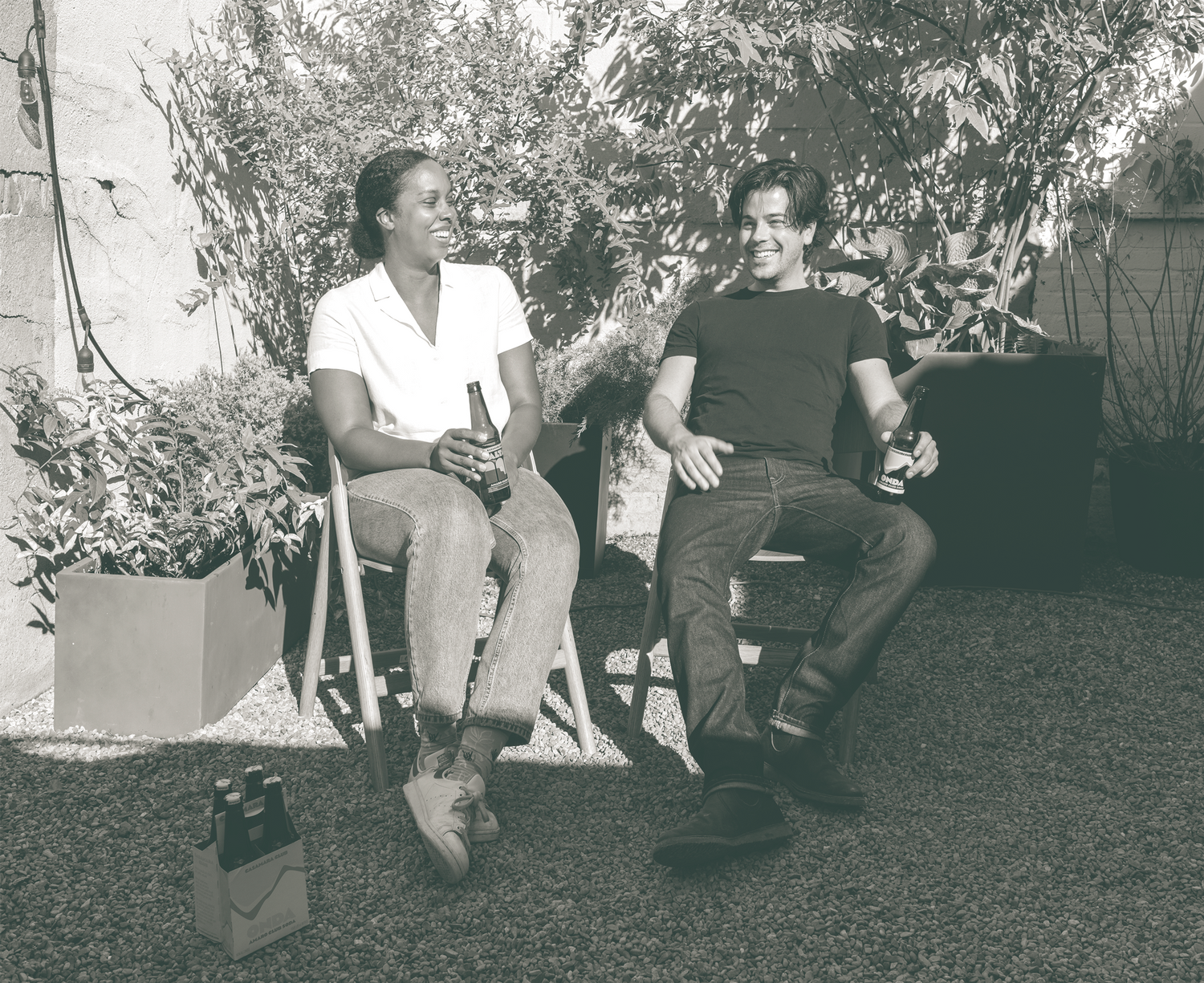
Some of the biggest names quit outright, as the interviews above show. Behind the bar, though, the everyday moderation move is alternating — one alcoholic drink, one non-alcoholic, repeat. The industry calls this "zebra striping," and the people running rooms vouch for it.
What Zebra Striping Actually Means
The term describes alternating between alcoholic and non-alcoholic drinks in a single session. Have a cocktail, then have something without alcohol, then decide if you want another cocktail.
The people pouring the drinks vouch for it. Harrison Snow, co-owner and beverage director of Lullaby in New York, told VinePair: "It's usually not until you have your next drink when you realize you probably shouldn't have done that. Zebra striping can act as a buffer." Nicky Craig, general manager of Panda & Sons in Edinburgh, saw it at home first: "I remember the way my mom used to drink when I was growing up. In the middle of the evening, she'd switch from alcohol to soda or water."
According to Drinkaware UK, about 25% of pub-goers practice some form of zebra striping. NIQ research cited by Fast Company found that 93% of non-alcoholic beverage buyers also purchase alcoholic beverages — these aren't sober people, they're people moderating.
This is why the non-alcoholic beverage market looks the way it does: $925 million in off-premise sales as of mid-2025, growing 22% a year per NIQ, driven by the moderation movement rather than sobriety.
Why It Works Better Than "Just Drink Less"
Telling yourself to "just have fewer drinks" requires constant decision-making. Each round, you're negotiating with yourself. Zebra striping removes the negotiation by creating a simple rule: every other drink is non-alcoholic.
The key insight: the NA drink has to be satisfying. Water doesn't work. Diet Coke doesn't work. You need something that feels like a drink — complexity, ritual, something worth savoring.
Derek Brown's RATE Method
Brown developed a framework he calls RATE, which he shared with CNBC:
Replace: Swap some alcoholic drinks for non-alcoholic alternatives that satisfy the same craving for flavor and ritual.
Avoid: Identify situations where you tend to overdrink and either skip them or have a plan going in.
Temper: Modify how you drink — smaller pours, lower-ABV options, alternating with water or NA drinks.
Elicit help: Tell someone what you're trying to do. Accountability changes behavior.
Zebra striping combines Replace and Temper. You're not white-knuckling through a party with club soda — you're drinking something good, just not alcohol every time.
What to Drink on the Stripe
The stripe drink matters. If it feels like a consolation prize, you won't stick with it.
Bartenders who've figured this out reach for drinks with complexity — bitter, botanical, savory, tart. Not sweet. The goal is something that engages your palate the way a cocktail does, not something that reminds you of what you're missing.
Category 1: Botanical Sodas
Extra-dry sodas built around separate botanical extraction. Each ingredient extracted individually, then precision-blended at low sugar (4-5g per serving versus 25-40g for typical sodas or juice-based mocktails).
Why bartenders use them: Bitter-sweet complexity, food-pairing friendly, something to sip slowly. They function like the NA equivalent of an Aperol Spritz or Negroni — aperitivo-style drinks rather than sweet refreshers.
Casamara Club uses separate extraction for chinotto, juniper, orris root, and other botanicals. Their range:
- Alta: Chinotto, juniper, orris root, mandarin — Negroni-adjacent bitter-citrus profile
- Onda: Sage, lemon, rhubarb — almost savory, pairs with food
- Como: Mandarin, mint, wildflower — approachable, versatile
- Sera: Ruby grapefruit, cinnamon, rhubarb — tart, dry
4-5g sugar per 12oz. Mediterranean sea salt for mineral finish.
A good NA beer is the classic stripe drink too, and the easiest order in any bar. If its heaviness wears on you across a long night, that's when the drier options above earn the slot.
How to serve: Cold, over ice or not, citrus twist optional. Treat it like you'd treat a beer or glass of wine — something to have alongside the evening, not a single ceremonial drink.
Category 2: Ready-to-Drink Aperitivos
Full-flavored, cocktail-strength NA drinks (8-12g sugar per 8oz). Designed to replace Negronis and spritzes during aperitivo hour.
Superclasico Aperitivo from Casamara Club appears in Forbes Vetted's guide to the best non-alcoholic drinks: "Its flavors are perfectly balanced between warm spices, bright citrus notes and bitterness." Imbibe made it a Drink of the Week and called it "supremely crushable."
Inspired by Italian chinotto aperitifs and Negronis. Chinotto and juniper upfront, tannin from kola nut and allspice in the middle, tart red currant, lingering bitterness softened by Madagascar vanilla.
How to serve: Over ice in a rocks glass with an orange wheel. Or lengthen with soda water for a spritz-style serve.
Category 3: NA Spirits + Mixer
Non-alcoholic gin, whiskey, or tequila alternatives (Seedlip, Ritual, Monday, Lyre's) mixed with tonic, soda, or botanical soda.
Why this works: Familiar format. Everyone knows what a G&T is. The ritual is identical — build over ice, add garnish, sip slowly.
The ratio: 2 oz NA spirit + 4-5 oz tonic or botanical soda.
Pro tip: Botanical sodas like Onda or Como work as lower-sugar tonic alternatives — you get bitterness and botanical complexity at 4-5g sugar instead of tonic's 20-25g.
What Doesn't Work
Fruit juice. Soda. Anything that reads as "not a real drink." The psychology matters: if your stripe drink feels like settling, you'll abandon the stripe.
Jim Kearns, who stopped drinking but continued bartending, described the mental shift in VinePair: "I've found that tasting analytically utilizes a very different part of my brain than the instant, id-level gratification of sitting down to have a drink."
The stripe drink needs to engage that same analytical part of your brain — complexity you can pay attention to, not sugar water.
The Mindset Shift
The bartenders who've made moderation work long-term describe a fundamental reframe: drinking less isn't deprivation, it's professional.
It's Not About Willpower
Derek Brown's observation, from a Boisson interview: "We can live without alcohol, but we can't live without each other."
The insight: what you actually want from drinking situations is usually connection, ritual, transition from work to leisure. Alcohol is one way to get there. Not the only way.
Enhancement, Not Deprivation
Chris Cardone's framing, from Ria Health: "Not drinking has actually enhanced my life in many aspects."
This reframe matters. If you think of moderation as giving something up, you're constantly fighting yourself. If you think of it as gaining something — clarity, better sleep, more productive mornings, sustainable career — the calculus changes.
The Permission Structure
Leo Robitschek, beverage director at Eleven Madison Park and NoMad (James Beard Award winner), co-founded Second Sip, a half-strength gin. His reasoning, per Fast Company: "After two, that decision to have a third is usually a tricky one."
Lower-ABV and non-alcoholic options give you a permission structure. You're not saying no to a drink. You're saying yes to a different drink.
Nina Granados, bartender at Vanguard Wine Bar in New York, described her evolution at Tales of the Cocktail: "For me it was, don't drink what you don't like, like a Jäger shot. It took a lot time to get there, to stand my ground."
Standing your ground gets easier when you have something good in your hand.
How to Start
Dry January doesn't have to mean 31 days of nothing. For most people, learning to moderate—building the zebra striping habit—delivers more lasting results than a month of abstinence followed by a February 1st overcorrection.
Here's how to use January as a forcing function, based on what bartenders have learned.
1. Pick Your Stripe Drink Before Going Out
Decision fatigue kills moderation. If you wait until you're at the bar to figure out what your NA option is, you'll default to alcohol because it's easier.
Know before you arrive: "I'm alternating with [specific drink]." Stock that drink at home. Order it by name at bars.
2. Use the 1:1 Rule
One alcoholic, one non-alcoholic, repeat. Don't negotiate with yourself about whether this particular drink "counts." The rule is simple so you don't have to think.
If you want to go further: start with the NA drink. It sets the pattern before the first cocktail arrives.
3. Stock Your Fridge
You won't zebra stripe at home if there's nothing good to drink. Most moderation failures happen when the only options are alcohol or nothing.
Keep 6-12 bottles of something you actually want to drink. Botanical sodas, NA aperitivos, whatever works for you. The cost is trivial compared to alcohol, and having options changes behavior.
4. Tell One Person
Derek Brown's RATE method includes "Elicit help" for a reason. Telling someone what you're trying to do — a partner, a friend, a bartender you know — creates accountability without drama.
You don't need to announce it to everyone. One person who knows is enough to change how you show up.
5. Don't Make It Precious
The goal is building a sustainable habit, not proving you can abstain. If you have a drink when you planned to stripe, you haven't failed Dry January—you've learned something about your triggers.
The bartenders quoted in this article didn't get to sustainable moderation in a straight line. They experimented, adjusted, found what worked for them. January is your month to do the same.
Frequently Asked Questions
Q: What is zebra striping?
A: Alternating between alcoholic and non-alcoholic drinks during a single drinking session. Have a cocktail, then have something NA, then decide if you want another cocktail. About 25% of UK pub-goers practice some form of this, and 93% of NA beverage buyers also buy alcohol — it's a moderation strategy, not sobriety.
Q: What should I drink on the stripe?
A: Something with complexity — botanical sodas, NA aperitivos, NA spirits with tonic. The key is that it needs to feel like a real drink, not a consolation prize. Bitter, botanical, savory, or tart profiles work better than sweet ones. Water and Diet Coke don't satisfy the same craving.
Q: Do bartenders actually drink less?
A: Many of the most successful ones do. Jack McGarry (Dead Rabbit), Derek Brown (Columbia Room), Jim Kearns (Slowly Shirley), and others have spoken publicly about reducing or eliminating alcohol. They describe it as professionalization — building a sustainable career requires different habits than working your way up.
Q: Is Dry January worth doing?
A: Yes, but probably not the way you've tried before. Total abstinence for 31 days sets most people up to fail—and to overcorrect in February. Using January to build a zebra striping habit gives you skills that last. The goal isn't to prove you can quit; it's to learn what sustainable moderation looks like for you.
Q: How do I order non-alcoholic drinks at a bar without it being awkward?
A: Order by name. "I'll have a Seedlip and tonic" or "Do you have any botanical sodas?" works better than "What do you have that's non-alcoholic?" Most serious cocktail bars now have NA options. If they don't, that tells you something about the bar.
Q: Where can I buy botanical sodas?
A: Casamara Club ships nationwide at casamaraclub.com and is available at more than 100 of the best restaurants and bars, plus specialty retailers. Other options include Ghia, Three Spirit, and various NA aperitivo brands at specialty retailers and natural wine shops.
Sources
This article synthesizes interviews and reporting from the following publications:
- VinePair: Can Sobriety Make You a Better Bartender?
- What Is Zebra Striping? (VinePair)
- When Top Bartenders Give Up Drinking (Food Republic)
- Derek Brown on Mindful Drinking (CNBC Make It)
- Tales of the Cocktail: Serving While Sober
- Bartenders and Alcohol (Ria Health)
- Jack McGarry Interview (Men's Health)
- Zebra Striping Trend (Fast Company)
- Zebra Striping (Drinkaware UK)
- Derek Brown Interview (Boisson)
Industry statistics from NIQ consumer research, Journal of Studies on Alcohol and Drugs, and Drinkaware UK surveys.
Find Casamara Club at casamaraclub.com. Ships to all 50 states.
For restaurant wholesale inquiries: sales@casamaraclub.com