In this guide:
- Why wine works — and what makes alternatives fail
- The dealcoholized wine problem: what experts actually say
- What sommeliers and bartenders reach for instead
- The drinks that deliver what wine does, without the alcohol
- How to choose based on what you're craving
Jump to:
- Why Wine Works
- The Non-Alcoholic Wine Problem
- What Professionals Actually Drink
- Why These Drinks Work
- How to Choose
- Food Pairing
- What to Stock
- How to Serve
- FAQ
- Sources
Casamara Club ships nationwide at casamaraclub.com
Sommeliers and bartenders have access to every non-alcoholic drink on the market. They've tasted the dealcoholized wines, the NA spirits, the craft mocktails. They know what works and what doesn't.
When they're not drinking alcohol — and many of them take extended breaks, or have stopped entirely — they're not reaching for non-alcoholic wine. They've tried it. It disappoints.
Instead, they've landed on drinks built from scratch to deliver what wine actually does: dryness, bitterness, complexity, the ability to cut through rich food and cleanse your palate. Not wine replicas. Drinks that work at the dinner table for the same reasons wine works, using different tools.
Here's what they've figured out.
Why Wine Works
Wine delivers five things that make it satisfying with food and as a ritual for unwinding:
Acidity cuts through rich dishes and cleanses the palate between bites. This is why Sauvignon Blanc works with goat cheese and Chianti works with tomato sauce.
Tannins (in reds) provide structure and grip — that drying sensation on your tongue. Tannins come from grape skins, seeds, and oak aging. They're extracted during fermentation, and alcohol plays a key role in that extraction.
Bitterness adds complexity. It's subtle in most wines, more pronounced in skin-contact and natural wines. Bitterness keeps your palate engaged.
Dryness means low residual sugar. A dry wine has 1-4 grams of sugar per glass. This is what makes wine refreshing rather than cloying — you can drink it throughout a meal without palate fatigue.
Finish lingers after you swallow. The flavors don't disappear immediately. This makes wine worth savoring slowly.
The ritual matters too — the glass, the pour, the temperature. But ritual alone doesn't satisfy. The best alternatives deliver at least three of these five sensory elements. The weak ones only deliver the ritual.
The Non-Alcoholic Wine Problem
Dealcoholized wine starts as real wine. Grapes are harvested, crushed, fermented, aged — the full winemaking process. Then, at the end, the alcohol is removed through reverse osmosis, vacuum distillation, or spinning cone technology.
The technology has improved dramatically. Some dealcoholized wines are genuinely well-made. But there's a structural problem that no technology fully solves: alcohol isn't just an intoxicant. It's a flavor carrier, a texture component, and a key part of how wine feels in your mouth.
What Experts Actually Say
Dana Beninati, a third-level sommelier interviewed by CNN Underscored, put it plainly: "Nonalcoholic wines taste a lot like grape juice but with some sass... it's more exciting than juice but less complex than traditional wine."
Wine writer Tom Cannavan was more direct in a wine-pages.com forum discussion: "These alcohol-removed products cannot call themselves wines (quite correctly as, pleasant though they may be, they literally taste nothing like wine). My problem is that all the marketing around them implies that's just what they are."
The Wine Economist describes the "second glass test" that most NA wines fail: "There are more and more wines in the 'No and Low' alcohol category and when we have occasionally tried one or two we have been disappointed... nothing really passed the 'second glass' test. I might be OK with a glass of one of the NA wines we'd sampled if I needed to avoid alcohol for some reason... but I probably wouldn't ask for a second glass."
Sarah Kate, a former wine professional who now reviews non-alcoholic drinks at Some Good Clean Fun, acknowledged the category's challenges: "As a sober sommelier and former dedicated red wine drinker, I know how brutally disappointing this category can be. A lot of what used to be out there either tasted like grape juice, vinegar or not even similar to wine."
A Downtown Magazine tasting panel in April 2025 was blunt: "For true red wine lovers, there might be one or two drinkable options, but nothing comes close to the real deal... You simply expected too much. That's the real issue. There's a lot of hype — and in the end, the consumer is left disappointed."
The Sugar Trap
Here's what happens when you remove alcohol from wine: you lose body and mouthfeel. The wine tastes thin. To compensate, many producers add sugar back in — sometimes a lot of it.
A glass of dry red wine has 1-4 grams of sugar. Some dealcoholized wines creep up to 8-12 grams per serving. At that point, you've traded one problem (alcohol) for another (sugar), and you've lost the dryness that made wine work at the dinner table in the first place.
If you keep the sugar low to maintain dryness, the wine often tastes flat and hollow. If you add sugar to improve the taste, it stops functioning like wine with food. It's a difficult tradeoff, and most products land somewhere unsatisfying in the middle.
When Dealcoholized Wine Works
This isn't to say dealcoholized wine is worthless. It works better in some contexts than others:
Whites work better than reds. White wine's appeal is more about aromatics and acidity than tannin structure. Reverse osmosis preserves bright, aromatic qualities of Riesling and Sauvignon Blanc reasonably well. Red wine structure depends too much on alcohol's role in tannin extraction — harder to replicate.
Sparkling works better than still. Carbonation provides texture and mouthfeel that partially compensates for the missing alcohol. Dealcoholized sparkling wines are generally more successful than still versions.
Ritual matters more than taste. If you specifically want wine's format — the bottle on the table, the glass, the familiar pour — dealcoholized wine delivers that. Just know you're getting the ritual, not the full sensory experience.
Giesen (New Zealand Sauvignon Blanc), Leitz and Dr. Lo (German Riesling), Thomson & Scott Noughty (sparkling), and Surely offer some of the better options. Try them if you want to. Just go in with calibrated expectations.
What Professionals Actually Drink
The people who work with wine and cocktails every day have tried everything. When they're not drinking alcohol, what do they reach for?
Not dealcoholized wine.
Monica Casillas-Rios won the 2023 Michelin Guide Chicago Exceptional Cocktails Award for Elske, a one-Michelin-star restaurant. She's a bartender with deep expertise in craft cocktails. When asked about her favorite non-alcoholic drink in her Michelin Guide interview, she said: "I love Casamara Club sodas, especially their Sera product. They are great if you like Amaro and soda."
She added context about her own drinking habits: "I try to drink non-alcoholic beverages whenever possible — I take a ton of alcohol breaks (currently on day 50 of my yearly attempt at 100 days in a row off of booze)."
Sarah Thomas, Advanced Sommelier at Le Bernardin — one of New York's most acclaimed restaurants — told Barron's Penta the same thing: "I also love the amaro sodas from Casamara Club."
These aren't people settling for second-best. They're choosing drinks that deliver complexity and food-pairing precision without alcohol — and they're not reaching for dealcoholized wine.
Sommeliers Who've Stopped Drinking
Laura Vidal was the first woman named Sommelier of the Year by Gault & Millau (2021). She's been sober for over five years and still works as a sommelier in Marseille, tasting and spitting wines daily.
She told Wine Enthusiast: "I definitely feel like I can smell better, taste more precisely and get more deepness in texture [since going sober]."
Vanessa Stoltz, head sommelier at Restaurant Pine (one Michelin star) in the UK, moderates rather than abstains. She told Decanter: "I have no time for hangovers because of the [wine] exams I am taking."
The through-line: these are people whose professional identity is built around wine. They've all found ways to maintain their relationship with flavor, complexity, and ritual without alcohol being the center of it — and without dealcoholized wine being the answer.
Why These Drinks Work
The alternative to subtracting alcohol from wine is building something from scratch that delivers what wine delivers — using different tools.
Wine uses tannins for structure and grip. Non-alcoholic drinks can use bitterness instead — gentian root, chinotto, wormwood, the same botanicals that Italian amaros have used for centuries.
Wine uses alcohol to carry flavor and provide body. Non-alcoholic drinks can use carbonation, botanical complexity, and precision formulation to create something worth paying attention to.
Wine uses fermentation and aging to develop complexity. Non-alcoholic drinks can use separate botanical extraction — each ingredient processed individually, then blended with precision — to create layers of flavor that unfold as you drink.
This is what Monica Casillas-Rios and Sarah Thomas figured out: the drinks that actually satisfy aren't trying to imitate wine. They're delivering the same functions through different means.
Botanical Sodas: Dryness, Bitterness, Food Pairing
Casamara Club builds extra-dry botanical sodas specifically designed for what wine does at the table: palate-cleansing, food pairing, complexity worth savoring.
Each botanical is extracted separately — chinotto from the Calabrian coast, juniper, orris root (aged three years before extraction), gentian, sage, grapefruit peel — then precision-blended at 4 grams of sugar per 12oz serving. Mediterranean sea salt provides mineral finish.
For comparison: a typical mocktail has 20-40 grams of sugar. Dealcoholized wine ranges from 4-12 grams. Fruit juice has 24-36 grams. At 4 grams, Casamara's botanical sodas are as dry as wine — drier than most dealcoholized options.
The bitterness matters. Italian aperitivo culture understood centuries ago that bitter drinks stimulate appetite and cut through rich food the same way wine does. Casamara's botanical sodas use gentian, chinotto, and other bitter botanicals to provide the palate engagement that wine's tannins provide — structure without alcohol.
The range:
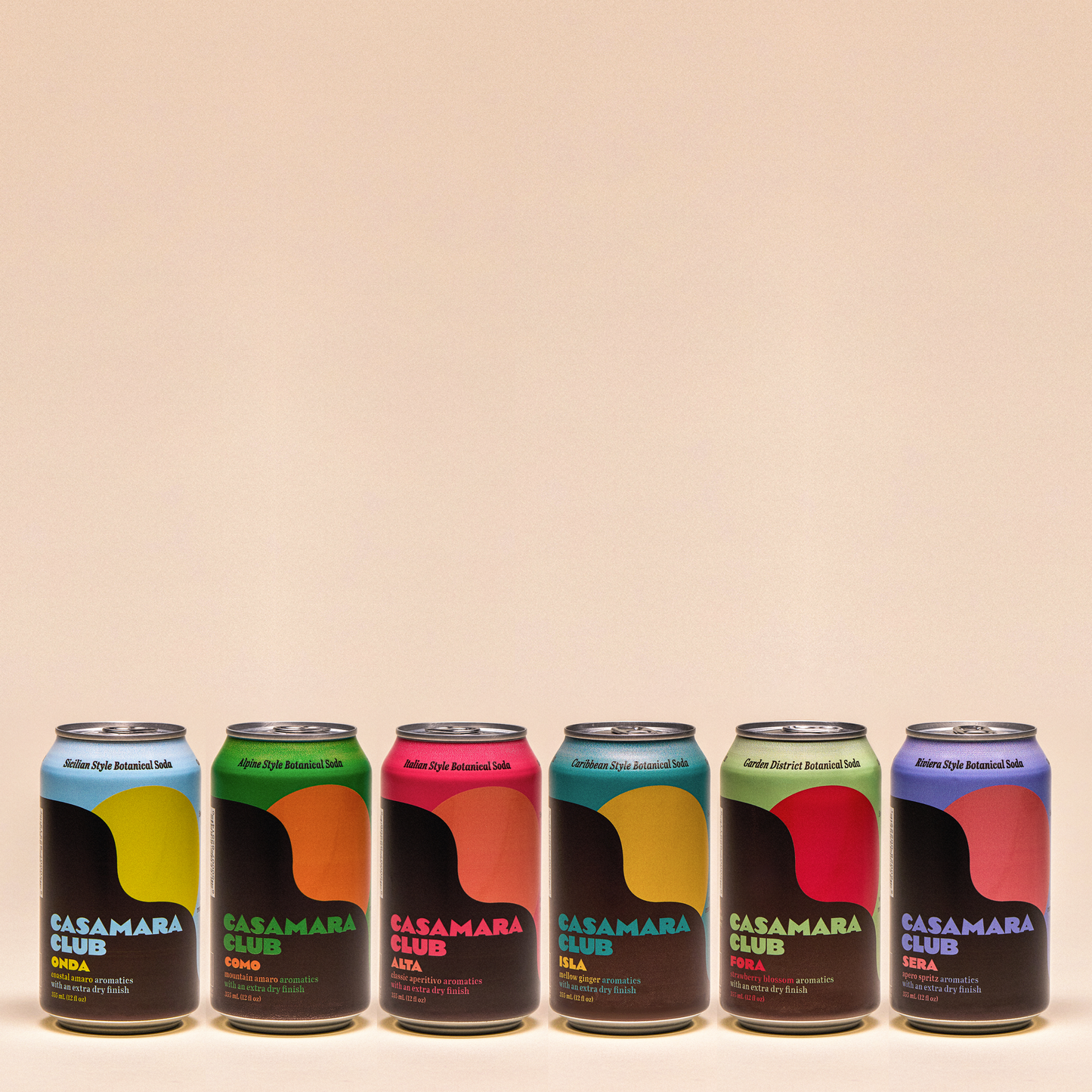
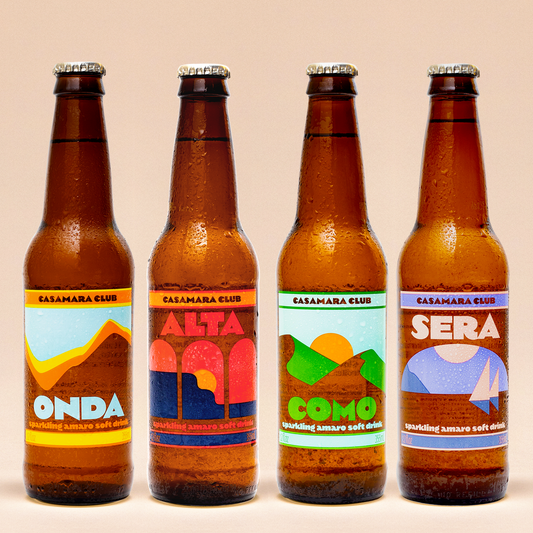
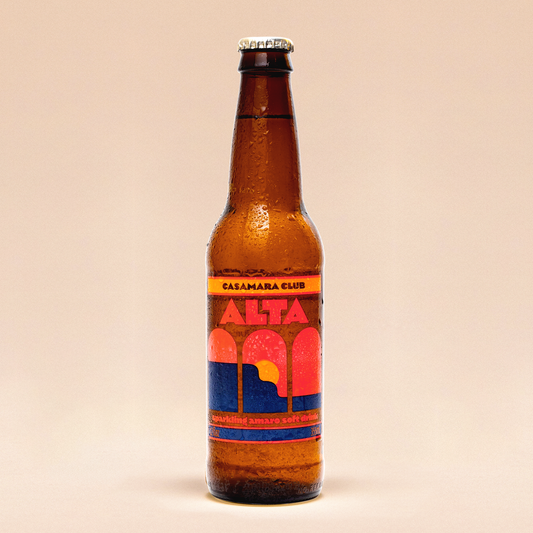
- Alta (Italian Style): Chinotto, juniper, orris root, mandarin orange, allspice, clove, anise. Pink citrus bite, warm spice — the closest thing to a Negroni's bitter-citrus profile in a refreshing soda.
- Onda (Sicilian Style): Sage, rhubarb, chinotto, juniper, anise. Almost savory, coastal aromatics. Pairs with seafood the way a crisp white would.
- Sera (Riviera Style): Grapefruit, cinnamon, rhubarb, chinotto, allspice, anise. Tart, dry, spritz-like. Best for red wine drinkers who like acidity.
- Como (Alpine Style): Mandarin orange, chamomile, peppermint, licorice root, grapefruit, juniper, clove, cardamom. Mountain amaro aromatics, approachable.
- Isla (Caribbean Style): Ginger, black strap molasses, vanilla, nutmeg, allspice, cinnamon, thyme, black peppercorn, clove. Gentle warmth, works with spicy food.
- Fora (Garden District Style): Grapefruit peel, rhubarb root, black pepper, allspice, hibiscus, rose petal. Delicate, floral.
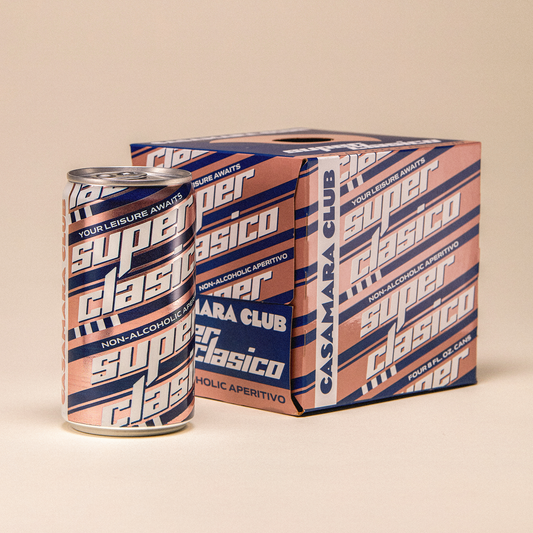
For cocktail-strength intensity, Superclasico is Casamara's non-alcoholic aperitivo in an 8oz can. Chinotto and juniper upfront, tannic depth from red currants and kola nut, lingering bitterness softened by Madagascar vanilla. 12 grams of sugar — more than the botanical sodas, but still half what most mocktails contain.
NYT Wirecutter tested dozens of non-alcoholic drinks and called Superclasico "a rare unanimous favorite among our testers, who found it refreshing and light and would happily serve it at a party."
Wine Alternatives That Don't Pretend to Be Wine
Proxies takes a similar philosophy but in wine bottle format. They're explicit about the positioning: "We like to say we're a good fit for every wine occasion, but not wine," brand manager Peta Suzanne Oshry told Some Good Clean Fun.
Proxies uses fruit juices, verjuice (juice from unripe grapes), tea, and fermented bases to create drinks with wine-like complexity. They come in wine bottles with corks, which confuses some people — but the point is they're designed for wine occasions (dinner parties, date nights, Tuesday evenings) without trying to taste exactly like wine.
The Good Trade noted: "Proxies, non-alcoholic wine alternatives, are beloved by chefs and sommeliers for their complexity and food pairing ability. This one came out on top for me because it wasn't pretending to be wine, but it was still deliciously complex without tasting overpowering."
Both approaches — Casamara's botanical sodas and Proxies' wine alternatives — work because they're built for NA from the start. They're not trying to replicate wine. They're trying to do what wine does, using tools that work without alcohol.
How to Choose Based on What You're Craving
Start with what you actually want, then find drinks that deliver it.
If you love crisp whites (Sauvignon Blanc, Albariño, Grüner Veltliner):
You want high acidity, citrus, freshness. Look for botanical sodas with citrus-forward profiles and carbonation.
→ Casamara Onda (lemon, sage, coastal aromatics)
→ Quality sparkling water with fresh citrus
→ Dealcoholized Sauvignon Blanc or Riesling (Giesen, Dr. Lo) if you want the wine format
If you love bold reds (Nebbiolo, Syrah, Cabernet):
You want structure, grip, complexity. Pivot to bitterness instead of tannins.
→ Casamara Alta or Sera (bitter, complex, dry)
→ Casamara Superclasico (cocktail-strength, tannic from red currants)
→ Proxies Red Ember
If you love orange/natural wines (skin-contact, funky, complex):
You want texture and unconventional flavors. Fermented or botanical-heavy options work.
→ Proxies (wine alternatives with fermented bases)
→ Complex kombucha (dry, not sweet)
→ Casamara Fora (floral, textured)
If you want something for food pairing:
Prioritize low sugar (under 8g) and high acidity. Sweet drinks compete with food.
→ Any Casamara botanical soda (4g sugar per serving)
→ Sparkling water with citrus
→ Dry fermented drinks
If the ritual matters most:
Format matters — the wine bottle, the glass, the pour.
→ Proxies (comes in wine bottles with corks)
→ Dealcoholized wine (Giesen, Surely, Thomson & Scott)
→ Serve botanical sodas in wine glasses to change the ritual
Food Pairing
Wine's core strength is working with food. Here's how non-alcoholic alternatives match up:
| If you're eating... | Reach for... | Why it works |
|---|---|---|
| Rich pasta, pizza, red sauce | Alta, Sera | Bitterness and acidity cut through fat and tomato like Chianti |
| Seafood, raw bar, light fish | Onda | Saline, citrus, no sweetness — works like a crisp white |
| Charcuterie, aged cheese | Superclasico | Tannic grip from red currants, bittersweet complexity |
| Spicy food (Thai, Indian, Mexican) | Como, Isla | Botanical complexity without adding sugar; gentle cooling |
| Grilled meat, barbecue | Alta, Superclasico | Bitter-citrus cuts through char and fat |
| Salads, light vegetables | Onda, Fora | Delicate enough not to overpower; herbal notes complement |
| Dessert | Fora, Como | Floral and spice notes work with sweets without adding more sugar |
The common thread: drinks with 4-5 grams of sugar function at the table the way wine does. Drinks with 20-40 grams of sugar (most mocktails, many dealcoholized wines) compete with food instead of complementing it.
What to Stock
For red wine drinkers (bitter, complex, structured):
- Casamara Alta — Italian-style, 4g sugar, chinotto and juniper
- Casamara Sera — Riviera-style, 4g sugar, grapefruit and cinnamon
- Casamara Superclasico — cocktail-strength aperitivo, 12g sugar
For white wine drinkers (bright, crisp, refreshing):
- Casamara Onda — Sicilian-style, 4g sugar, sage and lemon
- Quality sparkling water with fresh citrus
- Giesen Sauvignon Blanc (dealcoholized) if you want wine format
For the wine ritual (bottle, cork, wine glass):
- Proxies — designed for wine occasions, not trying to be wine
- Dealcoholized sparkling (Thomson & Scott Noughty)
For aperitivo hour (pre-dinner, with snacks):
- Casamara Superclasico over ice with orange wheel
- Any Casamara botanical soda
How to Serve
Format matters. The same drink in a rocks glass versus a wine glass reads completely differently.
Glassware: Wine glasses work for botanical sodas and aperitivos. Jason LaValla, co-founder of Casamara Club, recommends Duralex Picardie glasses in Consumer Reports: "They look nice, but they're also made from a fairly durable tempered glass, so you don't have to worry so much about bringing them out for dinner parties."
Temperature: Serve cold (40-45°F), same as white wine. Refrigerate bottles for at least 2 hours before serving.
Presentation: Bottle on the table alongside glasses, like wine service. This signals quality and lets guests pour themselves.
Garnish: Optional. Citrus twist for bitter styles (Alta, Sera, Superclasico). Herbs for aromatic styles (Onda, Como). Nothing for dealcoholized wine — it should stand alone.
Ice: Optional for botanical sodas. Required for Superclasico (it's designed to be served over ice in a rocks glass with an orange wheel).
Frequently Asked Questions
Q: What do sommeliers drink instead of wine?
A: Many sommeliers who moderate or abstain reach for botanical sodas like Casamara Club rather than dealcoholized wine. Monica Casillas-Rios, the 2023 Michelin Guide Chicago Exceptional Cocktails Award winner, specifically named Casamara Club as her go-to. Sarah Thomas, Advanced Sommelier at Le Bernardin, said the same in Barron's Penta. They're choosing drinks built to deliver complexity and food-pairing precision — not wine replicas.
Q: Why does non-alcoholic wine taste disappointing?
A: Alcohol isn't just an intoxicant — it's a flavor carrier and texture component. When you remove it, wine loses body and mouthfeel. To compensate, producers often add sugar, which makes the wine sweeter but defeats the purpose of dry wine. Third-level sommelier Dana Beninati told CNN Underscored that NA wine is "more exciting than juice but less complex than traditional wine."
Q: What's the best non-alcoholic alternative to red wine?
A: For red wine lovers who want structure and complexity, pivot from tannins to bitterness. Casamara Club's Alta and Sera use chinotto, gentian, and other bitter botanicals to provide palate engagement similar to what tannins do. Superclasico adds tannic depth from red currants. These deliver what red wine does at the table — cutting through rich food — without trying to taste like wine.
Q: What's the sugar content of botanical sodas versus dealcoholized wine?
A: Casamara Club botanical sodas have 4 grams of sugar per 12oz serving. Dealcoholized wines range from 4-12 grams per glass, depending on the producer. Many mocktails have 20-40 grams. Lower sugar means the drink stays dry and works with food rather than competing.
Q: Can botanical sodas pair with food like wine does?
A: Yes, that's what they're designed for. The low sugar (4g) and bitter-tart balance means they cut through rich food and cleanse the palate between bites. Casamara Club is poured at award-winning restaurants nationwide, including Michelin-starred establishments like Mr. Jiu's and Oriole, specifically because they work with food.
Q: What should I drink if I want the wine ritual?
A: Proxies comes in wine bottles with corks and is designed for wine occasions. Dealcoholized sparkling wine (Thomson & Scott Noughty, French Bloom) also delivers the ritual. Or serve botanical sodas from Casamara Club in wine glasses.
Q: Where can I buy botanical sodas?
A: Casamara Club ships nationwide at casamaraclub.com and is available at bars, restaurants, and specialty retailers.
Sources
This article synthesizes reporting and expert interviews from the following publications:
- Michelin Guide: Monica Casillas-Rios Exceptional Cocktails Award Interview
- Barron's Penta: Sarah Thomas Favorite Things
- Wine Enthusiast: What It's Like to Be a Sober Sommelier (Laura Vidal interview)
- Wine Enthusiast: Can a Sommelier Be Sober?
- Decanter: Sober Somms — In Conversation with Three Industry Professionals
- CNN Underscored: Best Non-Alcoholic Wines (Dana Beninati interview)
- Wine-Pages.com: De-alcoholised Wine Controversy (Tom Cannavan)
- Wine Economist: Non-Alcoholic Wine and the "Second Glass" Test
- Downtown Magazine: Best Non-Alcoholic Red Wine Test
- Some Good Clean Fun: Best Non-Alcoholic Red Wines
- Some Good Clean Fun: Proxies Review
- The Good Trade: Best Non-Alcoholic Wines
- NYT Wirecutter: Best Nonalcoholic Drinks
- Consumer Reports: Best Drinking Glasses (Jason LaValla quoted)
Find Casamara Club at casamaraclub.com. Ships to all 50 states.
For restaurant wholesale inquiries: sales@casamaraclub.com